Banking, the automotive industry, warehouses, local government, education and manufacturing. Different worlds at first glance, yet the same problem appeared everywhere: capable people spent too much time on routine work that a well-designed system could take over.
Experience from the real world
Jaroslav Krc worked in different environments in Slovakia, the United Kingdom and Austria. He came to understand sales, leadership, administration, education and the daily reality of manufacturing operations. That is where he learned that digitalisation should not begin by asking what software a company needs. It should begin by asking what people no longer need to do by hand.
The connection with technology began much earlier
He first sat down at a computer at the age of five. In secondary school, he and a classmate created one of their first scripts — effective enough to take the entire computer classroom offline for half a day. It was not yet a carefully designed system, but it already demonstrated the power of a few lines of code: a small intervention can affect an entire working environment.
From evening study to systems of his own
In 2017, he returned to studying IT alongside his job. In the evenings he developed his first programs, assembled his own robots and taught them to take their first steps. Professional training followed in application development, web technologies, databases, infrastructure and cybersecurity.
Security first. Education followed
His first professional projects focused on security software. Teaching programming came next, followed by leading the RedBlue Academy project in 2023. Working with students established a principle that remains part of RedBlue today: if a system cannot be explained clearly to someone who did not build it, it is not finished.
RedBlue was founded in 2026
As an independent company, it brought practical experience, development, control and automation into one whole. Not to give companies more tools, but to remove routine, connect fragmented processes and give people more room for the decisions where they are truly needed.
A turning point
The market has been reshuffled.
Until recently, software development was planned in long months or years. It required large budgets, sizeable teams and a willingness to adapt the company to the limits of an off-the-shelf solution. Powerful artificial intelligence models have changed that balance.
What used to be too expensive or distant for a smaller company can now, for the right project, be designed, built and validated in days or months. Custom software no longer has to be reserved for large organisations. It can reflect exactly how a company works and gradually take over the steps where a person adds no new decision.
The question is no longer whether a company can afford automation. The more important question is what it can stop doing manually today.
Administration changes first
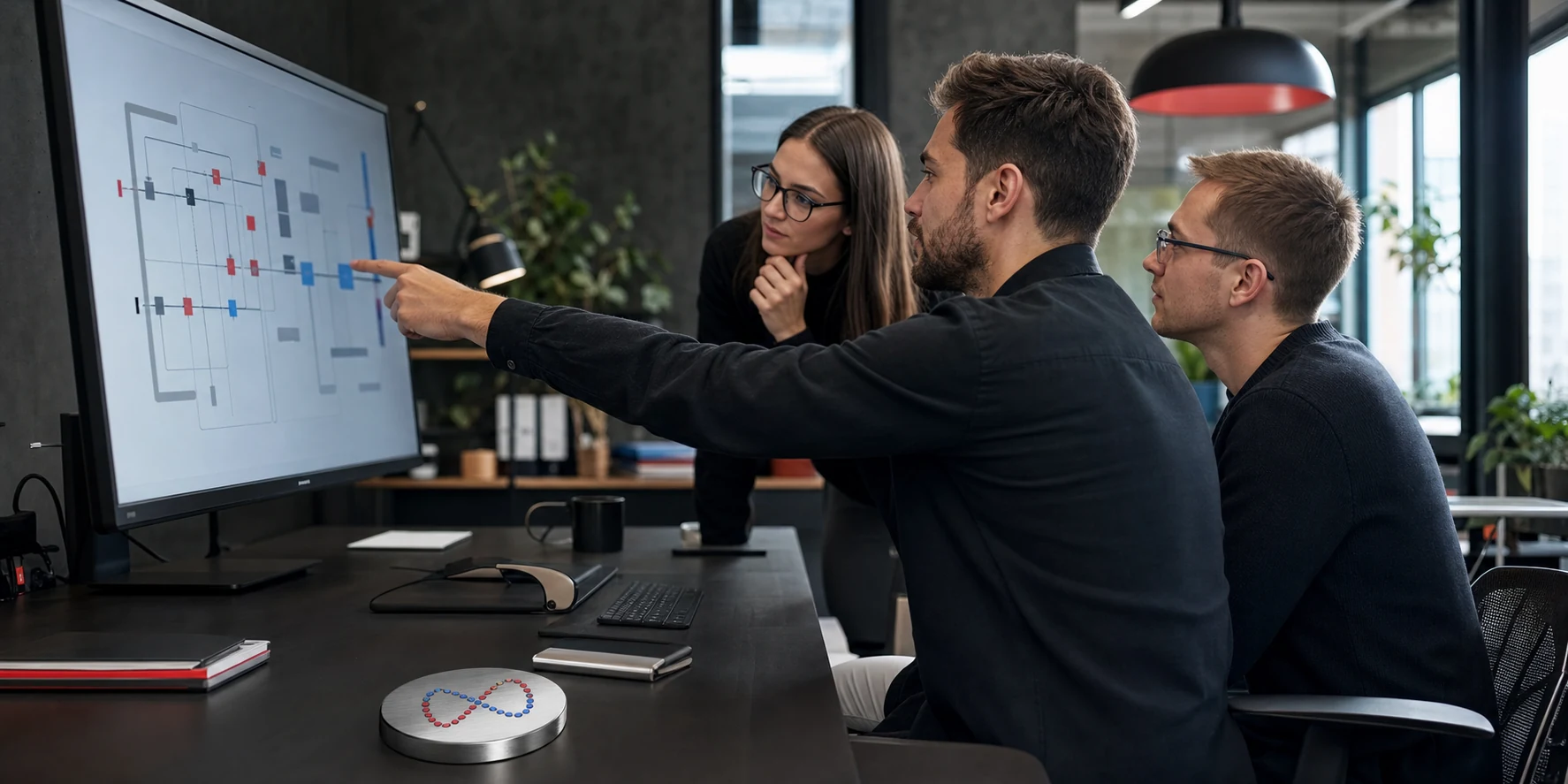
Every company has processes that can be automated. In administration, the result can appear quickly: data moves without retyping, a document triggers the next step and the system alerts a person only when a decision is required.
Manufacturing moves at its own pace
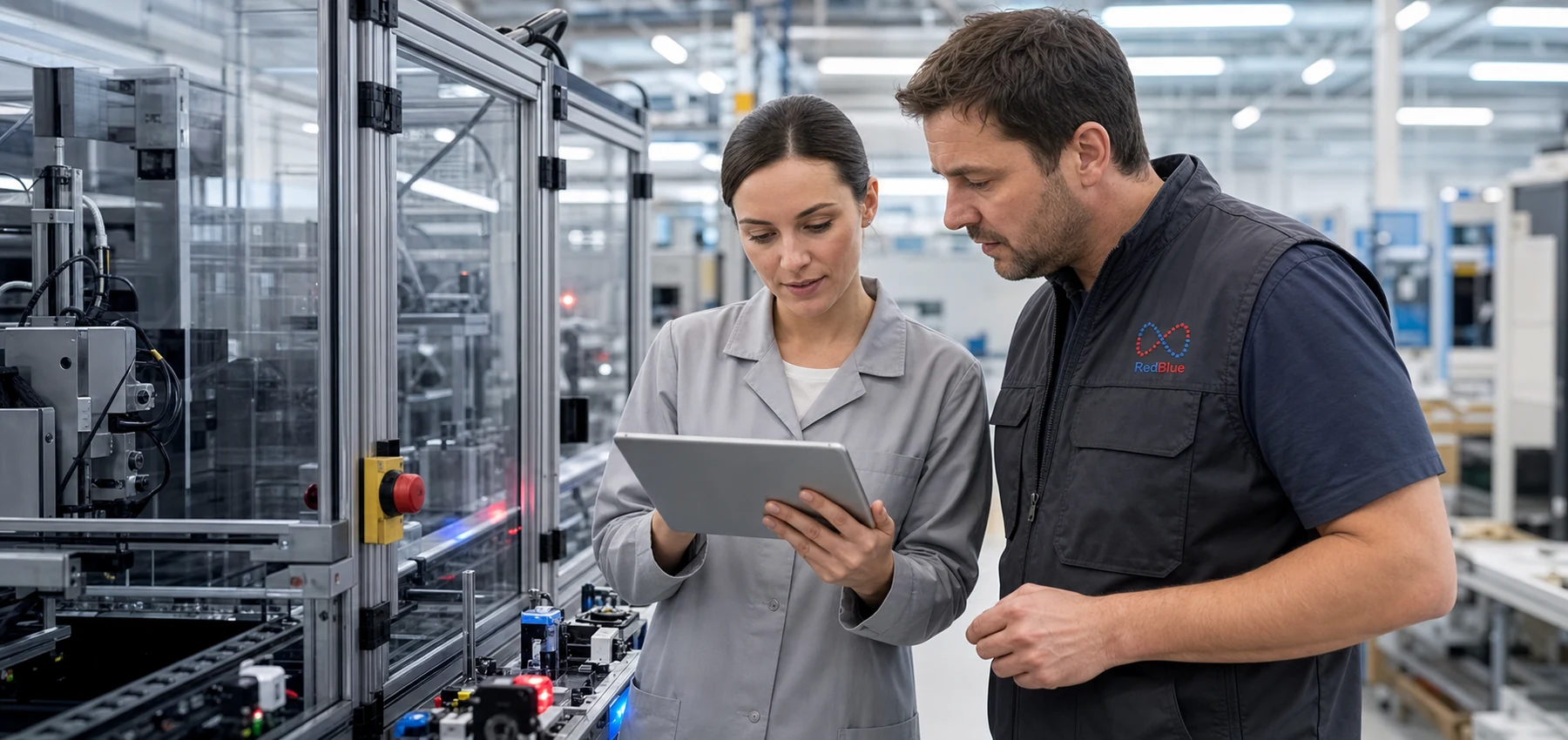
Manufacturing processes remain tied to the physical world. Machines, sensors and other components must be produced, delivered and connected. The software layer, however, can be developed in parallel — precisely around the processes, people and technology of a particular operation.
AI is an accelerator. Not a substitute for understanding.
Faster development does not automatically produce a better system. Artificial intelligence can shorten the path from an idea to a working solution, but it cannot decide which process creates real value, where human control must remain or what an incorrect decision could cause. That is why we do not start with technology. We start by understanding the work technology should take over.
„Technology should take over the routine. People should retain the decisions, responsibility and space to create something more valuable.“